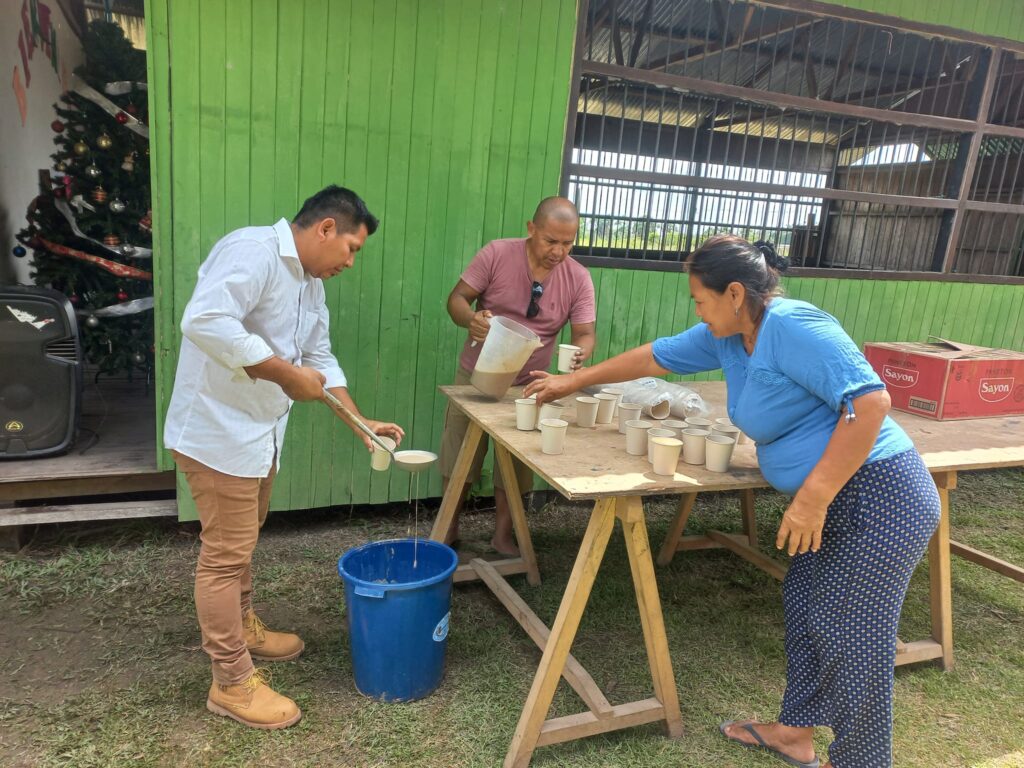
Bells
The needs are multiple and the necessary support, which is why we guide social projects to intervene in sensitive sectors, where the results can be sustained over time.
Here we present our latest fundraising campaigns so that you can join in collaborating.
Pilot Program: Shipibo-Konibo Nation in the Peruvian Amazon
In the Peruvian Amazon, there are officially 42 indigenous nations or so-called ethnic groups by the government. Since 1950, 11 groups have culturally and linguistically disappeared, 18 more groups are in danger of disappearance (Atlas Amazonia Peruana 1997).
The Shipibo-Konibos is one of the 42 indigenous nations, whose population in the census of 1997 was 20,178 people in 116 communities located along over 200 miles of the Ucayali River in the Regions of Ucayali and Loreto. Unofficially, the number is thought to be higher by the Shipibo-Konibo, and estimates by the Shipibo-Konibo organization count around 35,000 people in 150 communities. Thus, many Shipibo communities are not represented in the national census. Geopolitically, they are divided among 14 Districts, in 3 regions (Atlas Amazonia Peruana 1997, Hilario 2010).
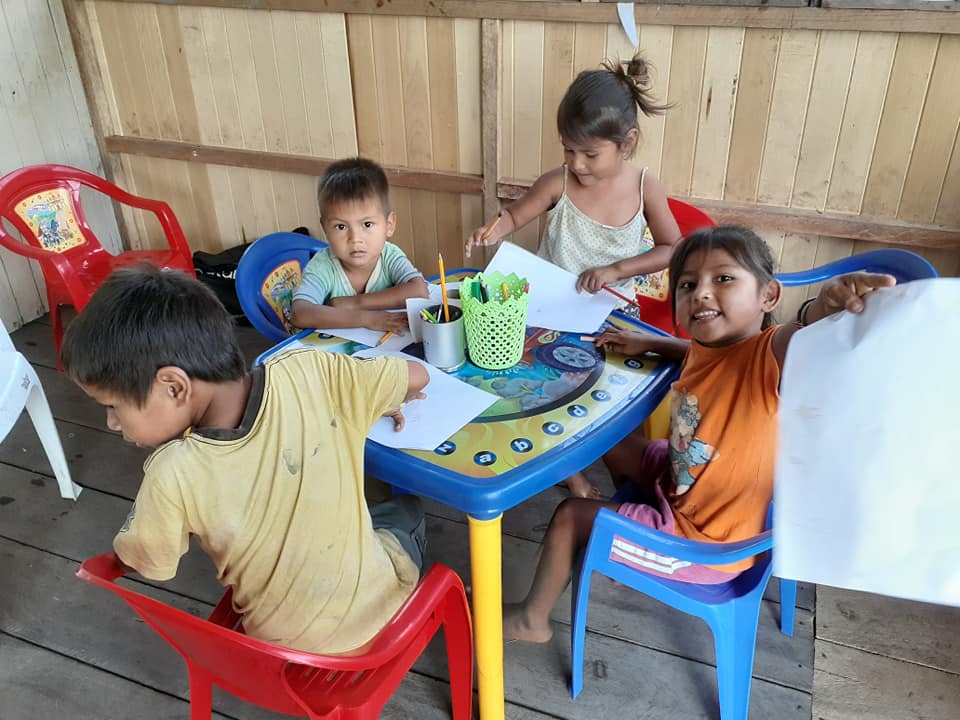
Brief Ethnography
The Shipibo-Konibo nation was historically two separate ethnic groups sharing the same linguistic family yet located in two separate geographical locations. The historical military alliance, inter-marriages, linguistic and cultural similarities have contributed in fusion now as one sole ethnic group.
In the last 25 years, there has been an increasing urban migration to the major cities of Pucallpa, Iquitos and most recently in Lima, the Peruvian capital. There, they have created the first Shipibo-Konibo community in the middle of Lima downtown, called Cantagallo, which is an abandoned garbage dump. There is approximately 1,000 Shipibo-Konibos living there.
The increasing deforestation of their territories by timber companies and contamination of their Rivers and lakes by fishers and goldminers have contributed in dwindling resources for their own survival. This is added to the need of the families to have access to cash for survival and educate their children in high schools and universities, which also has contributed in making decisions to migrate to the cities in search of better opportunities. This sudden changed from their rural communities to big cities has a devastating consequence for their cultural survival as individuals and as a group. Young men and women are embarrassed to be identified as Shipibo-Konibos. In any given daily communication in the cities, only Spanish are spoken in many families while in others Shipibo-Konibo-Spanish is common. Moreover, the traditional ecological, artistic, cultural, and technological knowledge is being lost in the new generation. There is a huge disconnect between generations, and urban and rural connections.
In the last twenty years, the increasing demand of Westerners, namely ayahusca drinking ceremonies/healings, have contributed in the diminish return of this culturally sacred practice that was historically conducted by a few. Nowadays, a lot of people who are in need of employment and shortage of cash consider themselves as shamans, charging an overpriced fees to new age tourists (Hilario 2010).
The Christian faith is also well marked among the Shipibo-Konibos—almost every village has a church, mainly Evangelicals. But most recently, other sects have been penetrating the remote villages such as Mormons, Seventh Day Adventists, and Israelitas (Peruvian sect). In short, this is the most current situation of the Shipibo-Konibos (Hilario 2010).
THE PROGRAMS
Program Needs Description
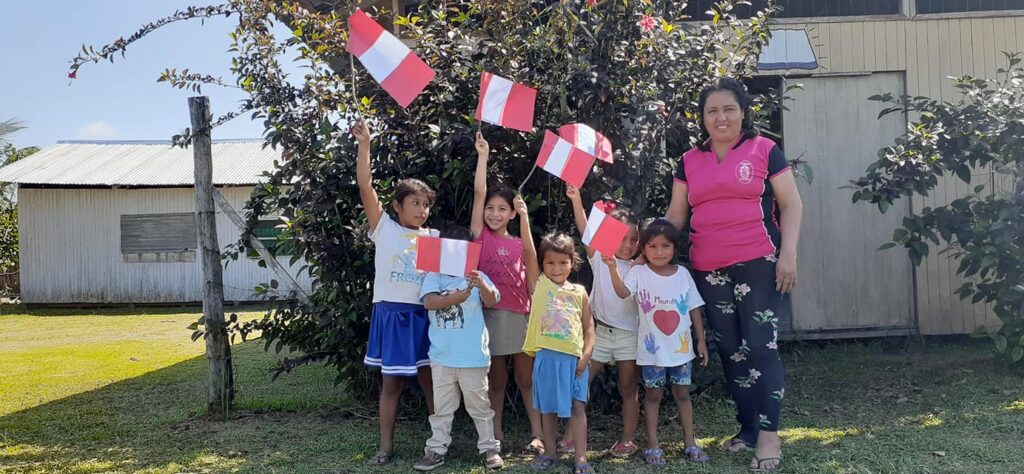
The settlement Nuevo Pucallpa where the pilot program is located mainly consists of invaded land by people living under extreme poverty. They need land to live on,and cannot afford to live in the city of Pucallpa. Landless people invade public lands and establish their huts. They have no basic services: potable water, electricity, sewage, schools, health posts or pavement. The adults are unemployed and thus do not have income to support their kids.
In Peru, it is mandatory that all children go to school. However, in the Amazon, only 3 out of 10 students at the elementary school level read somewhat and 3 out of 10 rural kids do not go to school at all. Those kids are forced by their parents to work on farm fields to help support the household (INEI 2010).
Moreover, the mortality rate of children over 5 years is 30 for every 1,000 children. Similarly, the morality for children under 5 years is 42 for every 1,000 children. With regards to anemia and malnutrition the statistic is staggering. For instance, 64.1% of children suffer of anemia and the malnutrition rate averages is 32.6 (INEI 2010).
To tackle the aforementioned problems, we have the following intervention and strategy in the shanty town of Nuevo Pucallpa:
EDUCATION, GOALS, STRATEGIES AND SUCCESS CRITERIA OF THE PROGRAM
The Seed of Hope Program is conducted by licensed professionals. Currently, we have 3 credentialed teachers who are Nilda Hilario, Angelica Hilario, and Jack Benedetti. Nilda has a professional degree in bilingual/intercultural elementary school education and is a full-time teacher at the nearby village, while Angelica has a professional degree in kindergarten bilingual/intercultural education, and also works at the village. Moreover, our third licensed teacher, Jack Benedetti has a professional degree in high school education. Nilda plans, organizes and programs the execution of the teaching for elementary school students, while Angelica similarly manages the kindergarten program. We do not have a program for high school students yet since we have only 2 high school age students. Nevertheless, we accommodate them when they come to class. The have been attending the classes faithfully. We have asked Jack Benedetti to create curriculum for high school students so we can begin to recruit students.
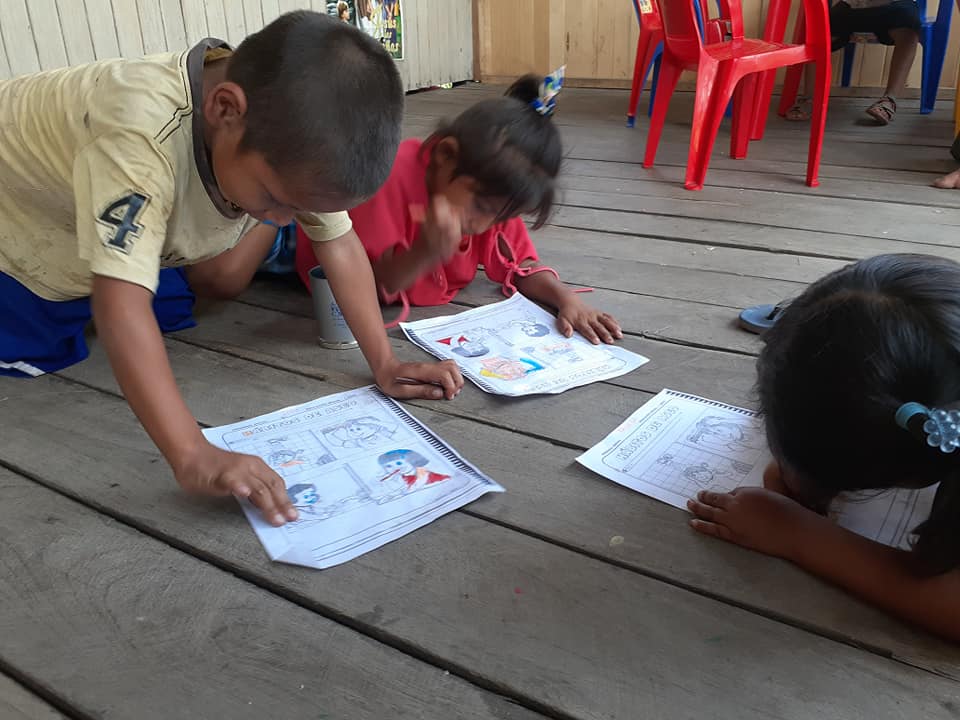
During the school year as well as in our summer program, we run one program for two school age groups: kindergarten and elementary school level.
Kindergarten and Elementary School Program
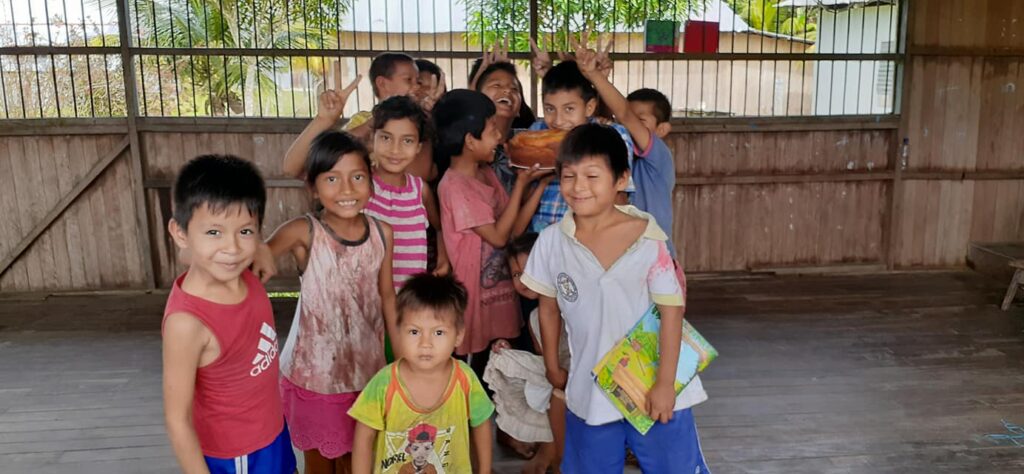
Goal 1: Students will develop, improve and strength their basic school skills
Both in our kindergarten and elementary school programs, we follow the National Curricula established by the Ministry of Education of Peru. This allows our kindergarten students to strengthen their motor skills to be ready for first grade. In the case of our older students, they get complementary education on Sundays, so they can strengthen their skills in math, reading, writing, and science. Our mission is to empower them so they can succeed in kindergarten, elementary and high schools respectively; thereby having the hope to succeed in their lives and leave the extreme poverty behind. The average attendance since the beginning of the program has been between 75 and 85 kids. Some of our students move to different towns with their relatives due to the fact that their parents and relatives are in constant search for jobs. As part of this fluctuation, we often have new students.
Goal 2: Students will learn, understand, know basic Portuguese language
We are also very excited to bring a new class to our program. Since April 2019, we began to teach Portuguese, which is taught by Limber Gomez who is a new volunteer. We currently do not offer English as before since we could not find another volunteer. Most of the kids miss learning English. For instance, three weeks ago, many students told us that they want to continue learning English. We are in search for another English teacher. Nevertheless, the kids are very excited to learn Portuguese which is somewhat similar to Spanish.
The Summer School
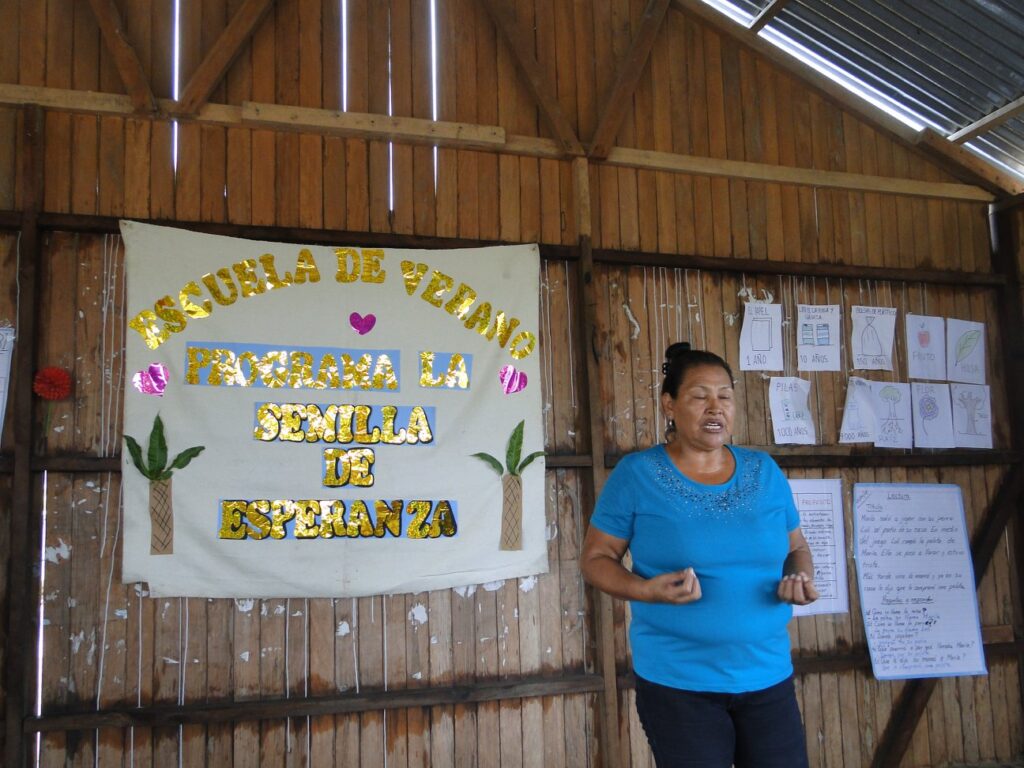
Goal 3: Students will achieve a deep understanding the interconnection between humankind and the environment
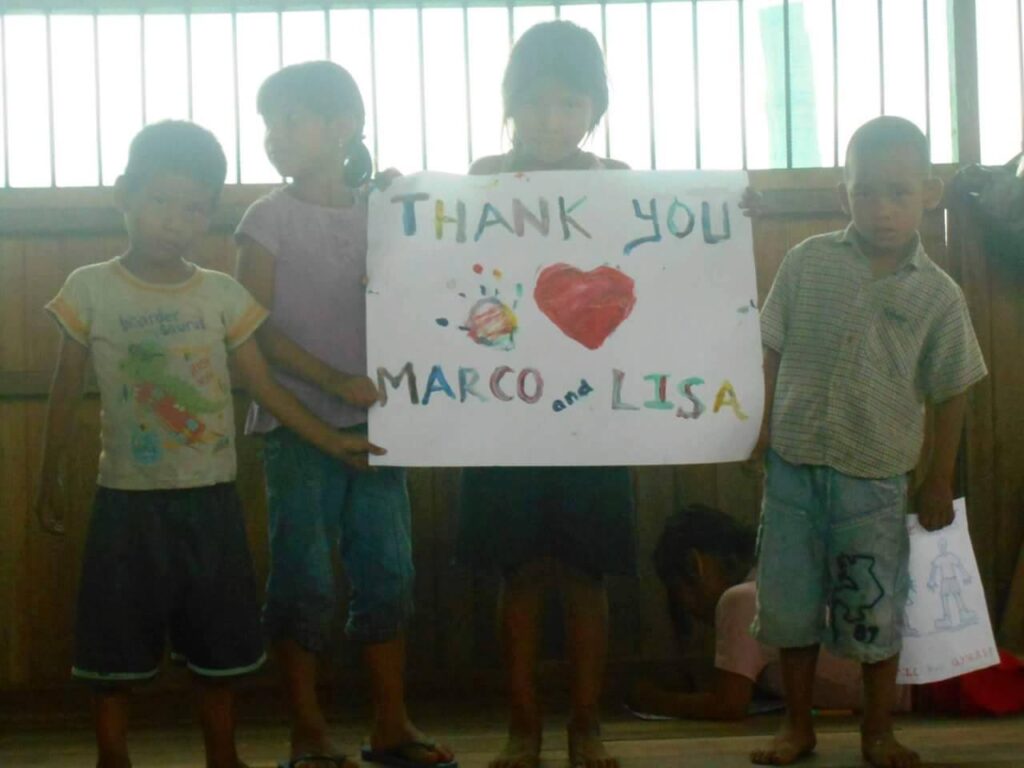
Besides our yearly program, we also organize summer school every year. Last year we run from February 9th to 18th before the pandemic. The average attendance of students was 80. As in previous years, which were funded by Mrs. Lisa Laudemann and Dr. Mark Goebel, we had a very successful summer program. One class that we emphasized in this period was environmental protection, mainly our responsibility with our planet. As in many developing countries, the use of plastic is ubiquitous, and sadly there is not much education about the harm that those elements bring to our health and the earth.
One major challenge we found, not just in our shanty town but all over Peru is that there are hardly recycling centers. This is why people in Peru burn their plastic waste, especially plastic bags and plastic bottles. In order to have a clean environment, we regularly collect trash, plastic bags and plastic bottles from the streets around our center. Unfortunately, there is no place to take them close by. Nevertheless, we recently found plastic bottles recycling shop, which is 20 kilometers from our center.
In our 2018 summer program, each student was given a mango plant with the idea that they must own it, so they are responsible for watering them. They were taught that in a few years the mango trees will provide them with fruits, give them clean air and shade, and the leaves will protect them from dust. Our vision is to create green citizens since their early years. We are very encouraged to inform that the mango trees are growing.
The subject matters that we taught during the summer as well as in our current programs are:
(1) communication and language,
(2) science and environment,
(3) mathematics,
(4) music and art,
(5) physical education,
(6) Christian ethics and values.
Goal 4a: Students will improve their communication skills
The objective in the communication and language class is to teach students proper grammar and orthography (its usage in formal and informal context), as well as, the use of different types of written and oral texts. So, we teach students to read, write, speak and listen.
Goal 4b: Students will improve their knowledge the planet and the environment
In the science and environmental class, the objective is to give students competencies, capacities, and knowledge through applied experiences in their natural habitat and society. The idea here is to teach them to respect nature. We promote a space for questions about our planet and our role in it.
Goal 4c: Students will improve their use of applied math
Our math class is applied since many of our older students are already working as street sellers or mototaxi drivers, whose ages average between 11 and 12. For instance, the teaching of addition, substation, division, and fraction are done by using their real-life examples.
Goal 4d: Students will learn basic music theory and learn to play guitar
In the music and art class, our new teacher Limber is teaching basic music theory, singing, and how to play a guitar. The students pass around one borrowed guitar to practice.
Goal 4e: Students will learn the habit of taking care of the body through exercises
Physical education is a key component of our program. The kids enjoy playing soccer and volleyball.
Goal 4f: Students will learn and apply Christian values as young citizens
We teach Christian ethics and values to our students—most of them are Catholics. We believe that having integrity is key to be successful people in life.
Educational: The Seed of Hope Program Management
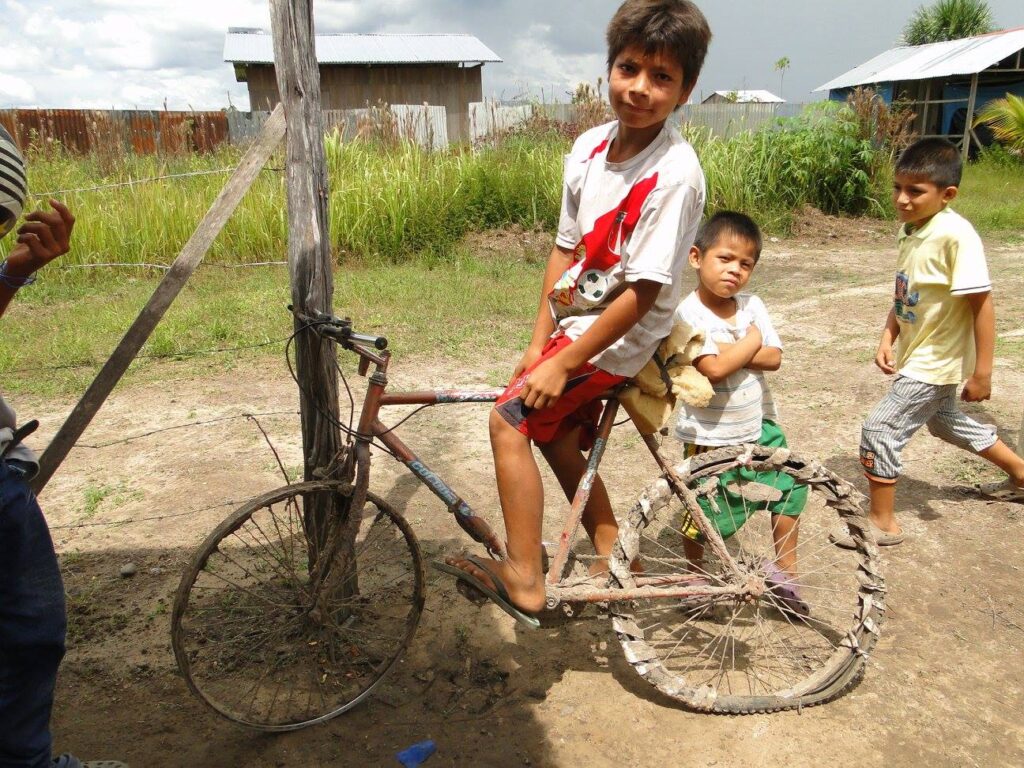
The Seed of Hope Program is the a project of ACF in Peru. The program is managed by Zoila Mori, who has a degree in business administration and is currently studying to be a licensed elementary school teacher. Zoila is young indigenous leader and professional who is a hard worker and honest.
She leads the after school program for kids from elementary school to high school where kids receive tutorship, engage in sports, music, art and cultural activities. The high school students receives leadership training so they can be the change makers in their neighborhoods, and communities. In this after school program, the best and the most talented kid are identified for potential scholarship recipients, as well as the need-based scholarships.
Green Citizens and Youth Leadership
The green citizens and youth leadership consist of training young people through young people in elementary schools, high schools, and universities through workshops, conferences, and certificate programs about the science of global warming, climate change, sustainable development and human rights. The program will also allow students to start environmental activism at early age, so that taking care of earth is not a one-time task, but a way of life.
Child Sponsorship: Food and Nutrition
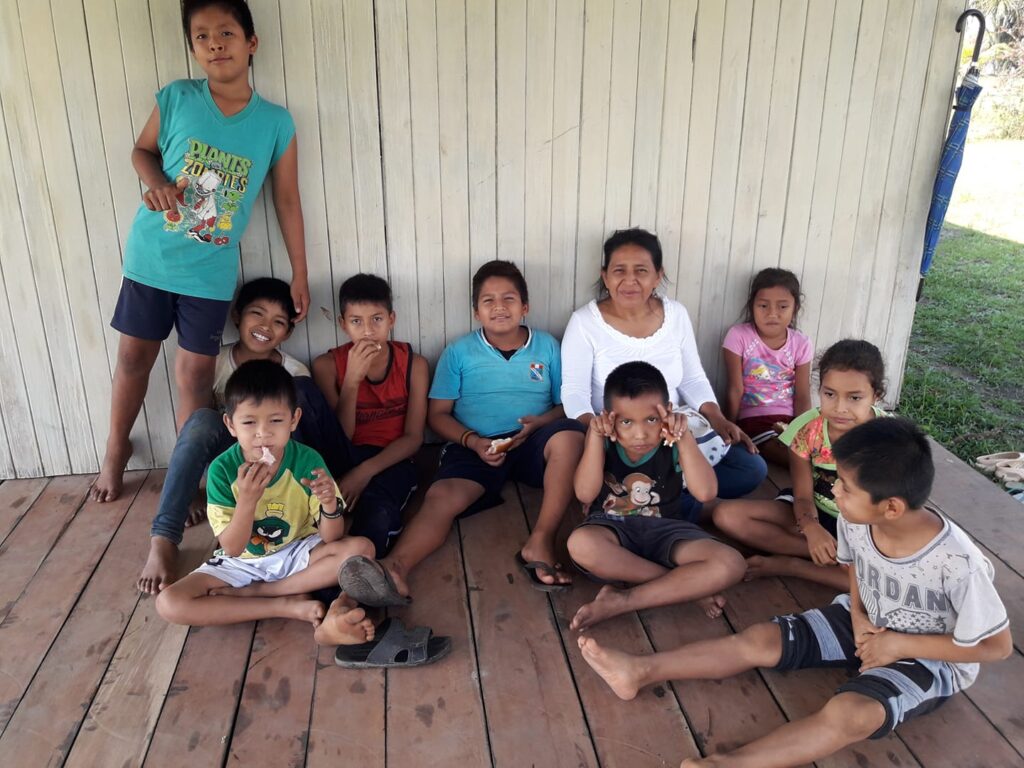
The program strives to empower indigenous and non-indigenous Amazonian children and their families to assure that there is always a counterpart between the sponsors and the parents or guardians in order to avoid paternalism and dependency. From this program philosophy, the 30 dollars a month of sponsorship will be complemented by parents or guardians’ contribution to every sponsored child’s future as guardians of the forest through their respective professions.
The fund’s expenditure must show the following indicators: (1) scholarly achievement from high to very high; (2) healthy and balanced food (milk, vegetables, avoid sodas; (3) medical check-ups every 6 month; (4) Learn English; (5) participate in sport activities; (6) participate in community service, church or civil activities.
Financial Accountability of Child Sponsorship Program
Every month the parents will sign a document of the reception of the fund, and they will have in return the responsibility to provide monthly financial statement to program manager, always providing with proper evidence of the fund’s expenditure, if there are not receipts a personal declaration of expenses will suffice.
The child sponsorship program will be managed by Angelica Hilario Escobar who is a Shipiba-Koniba indigenous bilingual teacher in the community of Bena Jema, Ucayali. Angelica is responsible, honest, and very careful in money management; thus, the program will succeed and expand. The program will receive 10% from each sponsored child to cover administrative fees. The manager must send a quarterly report to the ACF Headquarters to inform how the children are advancing in their studies. The report must have these two components: (1) Descriptive report how the students are doing in their health, grades and overall school; (2) Financial report with receipts or personal legal declaration.
Mentorship Program
Unlike other child sponsoring charities, ACF’s program is unique because of the mentorship component. The sponsor has the obligation to at least call or write once every quarter to the sponsored child to get to talk through translation (in case the sponsors don’t speak Spanish) and on a later stage in English. This mentorship is a crucial element in this program as the sponsor will advise and encourage the student to do the best he or she can do in all activities. This relationship will allow the sponsored child to have a role model and see the world beyond his or her community.
Advocacy and Public Policy: Alliance with Government and International Institutions,
ACF as an organization that works to promote the right of indigenous and non-indigenous children, will make a strategic alliance with local and regional (state) governments, Ministry of Education, Ministry of Women and Social Welfare, Ministry of Social Development as well as with UNICEF, UNESCO, PAHO, IADB, WB, and European Union to advocate for the rights of indigenous and non-indigenous children as recognized in the International Convention on the Right of the Children, particularly Comment 11.
A Model School
ACF plans to build a model school (Kindergarten to high school) that is multicultural and multilingual where indigenous children and non-indigenous children will be educated with national and international professional staff. The goal is to create new type of leaders that will holistically understand the interconnectedness of the world.